

Insights from the casting process
Why not try to help everyone do their best?

Dear friends,
Right now, I’m casting for a new project. It’s something of a dream show - at a theatre I adore, and the writing is provocative and intense and vivid and frightening. I feel very lucky to be doing it. More on this soon - sad to say, I can’t share more details of what it is yet.
This week, we’ve been casting for the show. I thought it might be useful, or interesting, or perhaps both, to share some insights from how I cast. This is for actors and other theatre makers - but also for anyone who has the power to inflect an interview process of any kind.
Famously stressful, often nerve-racking, traditional images of casting can be cruel, brutal, cut-throat. I hope this is changing in the industry - but everyone has a story of an interview they felt they could have done better. I consider it to be my responsibility during a casting process to get the best out of the person in front of me - to help them feel relaxed, and happy, and themself. Maybe even to have fun.
If you’re interviewing or casting someone, here are my top tips for helping the person show up as their best:
Find some common ground
I spend generally the first 5 or even 10 minutes of an audition chatting. It might be innocuous - one lovely actor yesterday told me about his new puppy, Chip - or it might be about a show I’ve seen of theirs or a collaborator we have in common. It doesn’t really matter what it is - the point is to see something of the person and help them feel like we are equals meeting in a space. A producer I worked with recently who has become a dear friend once described me as ‘the opposite of a gatekeeper’ which to me was the highest compliment. In finding the common ground in the first few minutes of the meeting, you’re sharing the power equally between you.
Break down the divides
I never like to sit behind a desk - either during rehearsals, or during castings. This week, my brilliant casting director arranged our four chairs in a circle - me, her, the writer and the actor coming in. I loved this - it made everyone feel like they were part of the same conversation, and it felt like a good reflection of my rehearsal process. I hate what is known in the industry as ‘table work’ - sitting around a table for the first week - even first two weeks, the horror! - exclusively doing textual analysis. Don’t get me wrong, I do a lot of close focus and deconstruction of the text, but I like to illuminate it by putting it on its feet as soon as possible. A table is a barrier. It’s great to break it down.
Get curious
I’m currently training to be a listening volunteer with the amazing charity Switchboard (the LGBTQ+ listening service), and so I’m tuning my brain strongly into open questions. That’s the Who What Where When Why How of it all - questions that invite thinking, rather than a closed ‘yes’ or ‘no’ response. Once I’ve broken the ice a bit with the actor I’ll ask them a few questions so I can get to know them better. Usually this will be about the kind of work they’re attracted to and a favourite job of the last few years. This is so far from a trick question and helps me understand them better, which honestly makes the whole process more interesting.
Tune into chemistry
I honestly believe that if a casting director (or if you’re in another industry, a recruiter) has brought someone into the room, they’ll be able to do the job. Starting from this assumption let’s me see the person more clearly, and be rooting for their success. It also allows me to concentrate more on the chemistry between us, which is for me the key ingredient in seeing if we’ll work well together. Our brains don’t have to work the same - but is there some coherence there? Do we vibe? Will we have fun in a room together? If the answer to this is yes, we’re much more likely to make good work.
Share your process and ask questions first
I love working with actions in the rehearsal room - transitive verbs that help expose what the character wants. An easy way to check if something is an action or not is to see if it fits into the sentence: “I want to ___________ you”. So, if the opening line of the scene is “What are you up to?”, it will feel very different in energy if the action is “I want to welcome you” versus “I want to expose you”.
In an audition, I’ll ask the actor first what they think the action is, and then we’ll work together from there to dial up or down different energies. It’s a fabulous shorthand to communicating the nub of our mutual understanding of a scene.
If you don’t work in theatre, when interviewing someone, is there a way of quickly sharing your working style and both inhabiting it together? Solving a problem collaboratively is an amazing way of seeing if you vibe.
Have fun
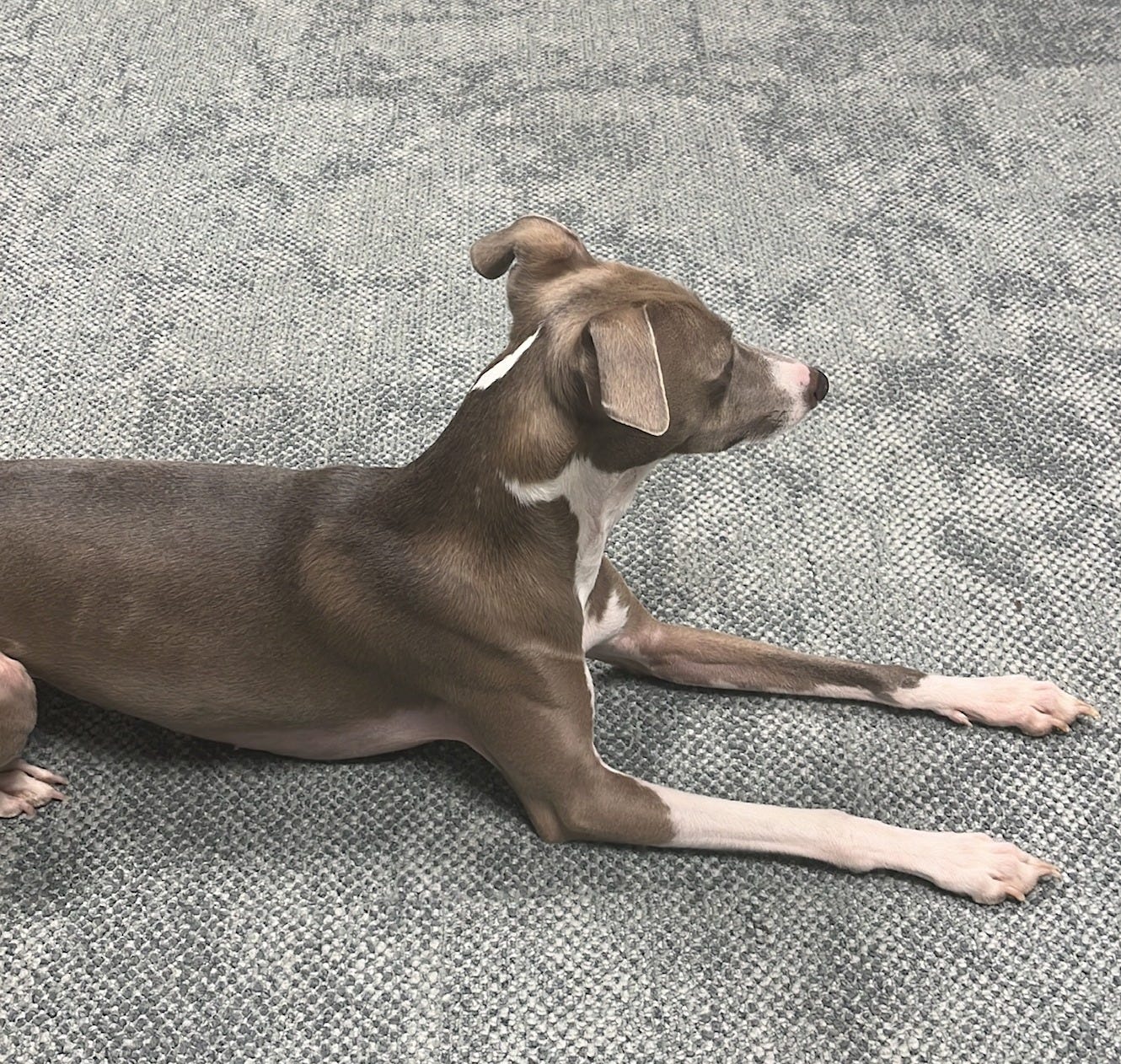
It’s no secret that I often have my little whippet, Pan, in rehearsals with me - but this week was the first time I ever brought her along to a casting. She loves this particular theatre and is made to feel very welcome there. And you know what? The informality of her presence in the casting room really brought an atmosphere of playfulness and fun for the actors. I would 100% bring her again - she turned out to be a great casting assistant. It’s amazing what the presence of a little playful animal does to everyone’s nervous systems. Most of the time, it gets us all to relax.
I pride myself on the fact that actors often say they enjoy auditioning for me. Often, I’ll know if someone is right or not very early on in the meeting, perhaps even when they first walk into a room. This is just because of how I’ve created the character in my head already - perhaps it’s something to do with height or build, perhaps it’s something more ineffable. But I consider my job always to be to get the best out of someone, and if I do this right, so often they will teach me something I didn’t know about the text. It’s a pleasure to go through what can be a very tiring and intense process if you enter into it with this kind of openness.
I wonder if any of what I’ve shared here resonates? Especially if you’re not in theatre, I’d be so curious to know if this would change the way you approach an interview process. If you have reflections, I’d love to hear them in the comments - and if you liked this letter, please do hit the little heart button - it helps other people find my work. Thanks for reading, right to the end. I’ll see you next week. You’re brilliant.
J x
Thank you for this! It’s rare as an actor to get a glimpse behind the curtain of the casting process so I found this super interesting and reassuring. All the best with the project!