

What does a compassionate writing day look like?
🔮 Turns out, compassionate = effective

Dear friends,
If you read last week’s letter, you’ll have seen that I’m committing this summer to writing my Big Play - and in the process, trying to build a more compassionate writing practice for myself.
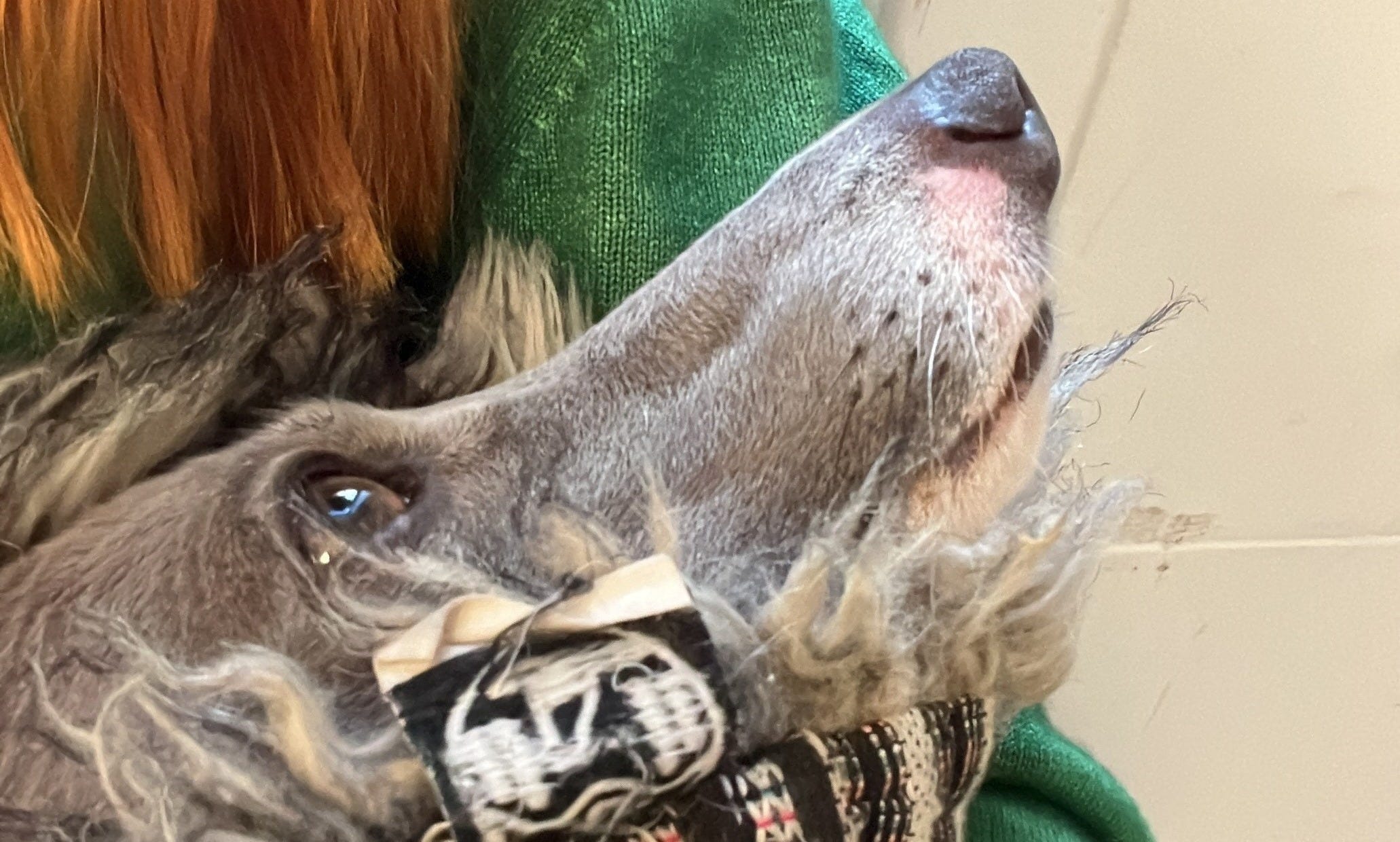
I thought about treating myself less like a punchbag, and more like the way I treat actors in rehearsal - with structure and clarity, but also compassion. On top of this, I want to treat myself like I treat my whippet, Pan - boundaries and firmness, but also loads of affection, understanding, the right amount of exercise at the right times and delicious food at mealtimes. (Though as an avowed vegetarian I would not want to eat what Pan eats, lol).
So - with all this in mind, here’s what my compassionate writing day looks like.
I’m also trying not to be too rigidly structured, so this is loose. Perhaps the most important part of it is not being ‘time optimistic’ with how much I can get done - allowing the writing to take longer or shorter without over-committing to other work, meetings or little tasks.
Morning - the writing starts before the writing starts
Wake up without an alarm if I possibly can - a much gentler ease into the day. Now that I don’t drink alcohol I find waking up and going to sleep so much easier.
Make a coffee and take it back to bed - already makes me feel like I’m on holiday.
Invite Pan to come and snuggle in bed with me.
Read something inspiring for 30-45 mins - right now I’m reading the brilliant new novel Ghost Eye by Amitav Ghosh.
Move my body - mostly depending on where I am in my cycle - currently I’m really vibing with Zacharias’s power mandala yoga classes on Peloton. I know working out from home isn’t for everyone, but I love it - especially as I can’t afford a gym right now - and it means it always happens, and I feel better for it. Peloton is amazing value if you don’t have the bike - £12.99 a month for the best digital studio experience I’ve ever had! I’m not sponsored by them (lol) but if you’re curious here’s 60 days of the app for free. This is how I discovered it - someone referring on Substack - and I’m so glad I did.
Walk with Pan - on the beach if I’m in Margate. Don’t take my phone. Look at the sea.
Have a nourishing breakfast.
In fact - the key to all this is my phone is not invited to the party until after I get back from walking Pan. Starting the first few hours of my day without my phone (I do Peloton on my laptop) makes so much difference to how I feel and how my energy begins the day.
The writing begins
A good writing day starts with the morning routine unfolding in the way I like - but it can be quite flexible. If I wake up later, perhaps I’ll only do 10 mins of reading and a 5 min stretch. The more I get to know myself, the more I realise I’m much better - and my inner critic is much quieter - when I’m less rigid.
Once I’m at my desk - which I like to be any time between 8am and 10am, depending on how the rest of the day is looking - I do 15 mins of morning pages by hand in my notebook. This is a version of the check in I do with actors in rehearsal. I ask myself where I’m at this morning personally and professionally - and then I do a little bit of CBT coaching at the end on anything that’s come up.
This next shifts depending on where I am at in a writing process, but next I like to do some ‘noodling’ longhand in my notebook around whatever I’m working on. This usually looks like asking myself a question about the plot, or a character, and answering it. There’s something about the process of writing by hand that really unlocks things for me creatively. It slows my brain down while simultaneously not allowing my inner critic to take hold. Many of my best ideas come this way.
Taking a break
I’m getting better at taking breaks - even when I’m on a roll! Finishing an idea then stopping in some flow isn’t the same as procrastination.
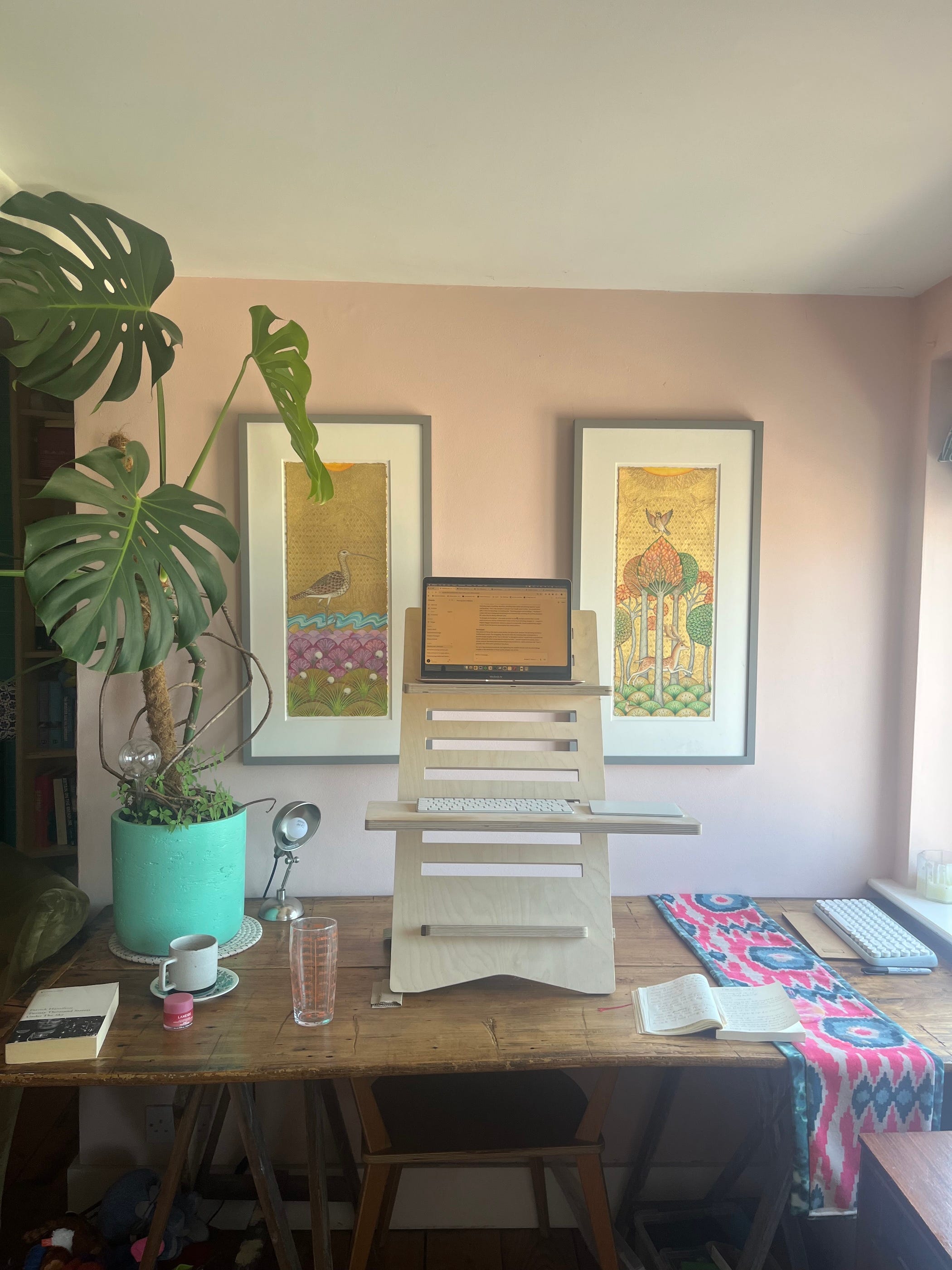
After noodling - definitely a break for a coffee. I’m trying to encourage myself to stand up and walk around more as I think it really helps move the ideas. During the pandemic, I invested in a wooden contraption that elevates the laptop so your normal desk can become a standing desk. I’d all but forgotten about it - I bought it for digital facilitation - but I’ve re-introduced it and I’m LOVING it. I find I write best by hand sitting down but typing standing is so much more pleasant.
Next, I like to do an iteration process moving from longhand to the laptop. This isn’t as simple as typing up my noodles - I’ll close the notebook and try to thrash out the same problem, but in a more structured way.
Iteration is absolutely vital to my creative process. This is something I’m only just learning to apply to writing. When I’m directing, I iterate again and again. We create rough ‘drafts’ of scenes and then repeat them and repeat them in different ways, shaping and changing til we find the right thing. Because, historically, my inner critic has been so active when I write, I found myself shying away from iteration, just writing at top speed, as fast as I can, then kind of covering my eyes til it was done. Now, I still work fast, but I let things percolate and shift and change more. The pressure’s off. Not surprisingly, it makes for much better work - not to mention a more fun process.
On the subject of the inner critic
A really powerful way I’ve found of working with my inner critic is - and bear with me - making sure they feel heard.
It’s a bit like whack-a-mole - the more I tried to push my inner critic down, the more they would spring up and appear in an unexpected place.
So, now, if they’re really going off on one, I set a timer for 15 mins and I say - OK, I know you’re doing your best here, and you want to keep me safe - I’m going to listen to all your ideas, all the things you have to say, and I’m going to write them down to deal with later.
The inner critic feels heard - so they can relax. They get to be a passenger on the journey - but they don’t get to drive the bus.
This method is astonishingly effective for me. The inner critic is just like all of us. If they feel heard, they are able to quieten down and relax.
The rest of the day
A good writing day will be trying to put down a good three hours before lunch. Stopping for a proper break and having a nourishing meal is also key, for me. I might even run an errand or have another walk with Pan.
Then, when I get back, I try and take the pressure off writing more. If I’m in the flow, then great - but if not, maybe I’ll watch something that is an inspiration for the project, read something, or cook a meal for later while turning over the idea in my mind.
Some of my best ‘writing’ comes from this sideways time - and if I fill it with other meetings, reading for other projects, tasks, etc, I find myself robbed of this critical gestation time.
Of course, sometimes other work creeps in - but I’m trying to be disciplined about that.
A thought on discipline
I’m somewhat embarrassed to admit that the biggest obstacle for my writing right now is email. I am totally addicted to checking my emails. The moment I find myself butting up against a challenging problem or entering a bit of the project that’s difficult, I find myself switching into email.
This is a disaster. Why? Because instead of sitting in the discomfort, staring out of the window for a moment, or even for 10 mins, and grappling with the problem, I’m breaking my concentration and my connection with the project - indeed, my connection with my own creative spark - and handing over my attention to email. Email! Boring, soulless admin, leeching my creativity away from me.
Of course, this makes sense. My email is where opportunity lives - when an exciting new project comes through, that’s where it will land. It’s classic gambling addiction - when I push the button to refresh, will I have won the jackpot?
But what really ends up happening is that my writing takes much, much longer - my concentration is shallower, it’s less satisfying, it’s less good and it’s far less fun.
So, for this period, I’ve challenged myself with checking my email just once a day for 15 mins. Set a timer, no checking until the end of the day. And you know what? Already, my urges to check my email are down. My enjoyment of my writing has massively increased. And I feel sure the output is better.
Breaking my email addiction will, I hope, be one of the best and longest lasting gifts I can give my writing practice. If you’re lucky enough to be able to have this relationship with email that you can control, I urge you to try it out. So worthwhile.
Ending the writing day
So, right at the end, I’ll check my email for 15 mins and make sure nothing too urgent has come through.
If I’ve finished something - especially a pitch, if it’s for TV - I’ll ping it over to my agents for their notes.
I’ll figure out where I want my writing to start with the following day so I have a task to pick up with.
Then, I’ll do a quick check out on paper - what went well, what didn’t go well, what would I do differently - before heading out for an evening walk with Pan.
While this is specific to writing, I’d love to hear if any of the tools and techniques resonate with other work - creative or non-creative - and if this is useful material. Let me know in the comments.
Thanks for reading, right to the end. I’ll see you next week. You’re brilliant.
J x